
Finding an upstairs bath leak in Mount Waverley
A customer in Mount Waverley called us after noticing water damage in their carpet. They were worried the upstairs bath was leaking, and they’d had problems with the bath since it was installed some years earlier.
George investigated, got in underneath the bath to check the water and drainage connections, and found the cause: the seal around the bath hob had deteriorated.
A slow leak from a bath doesn’t announce itself. Water that gets past a failed seal runs underneath the bath, into the floor framing, and turns up somewhere else entirely, often as a stain on a ceiling or damp in the carpet.
Quick answer
What was causing the water damage at this Mount Waverley home?
Doherty Plumbing Solutions inspected the water and drainage connections underneath an upstairs bath in Mount Waverley. The seal around the bath hob, where the top edge of the bath meets the tiles, had deteriorated, letting water through to the framing below.
Job overview
| Location | Mount Waverley, VIC |
| Property type | Residential, upstairs bathroom |
| Service | Leak detection and repair |
| Problem reported | Water damage to the carpet, and a concern that the upstairs bath was leaking |
| What we found | The seal around the bath hob had deteriorated |
| Work completed | Access opened to check the water and drainage connections under the bath; bath hob seal repaired |
| Plumber | George, Doherty Plumbing Solutions |
Why bath hob seals matter
Most built-in baths sit inside a tiled frame, called a hob, with the top edge of the bath resting against the tiles. The join between the two is sealed, usually with silicone.
That seal takes a beating. It gets wet every time the bath or shower is used, it flexes when the bath fills and empties, and it breaks down with age. Once it cracks or pulls away, water that splashes onto the hob runs straight into the gap.
Because the bath is fixed in place, you can’t see what’s happening underneath it. The water and drainage connections under a bath can’t be checked without opening up access, which is why a leak like this can go on for a long time before anyone knows.
What we found
To see underneath the bath without pulling it out, an access opening was cut in the wall next to it.
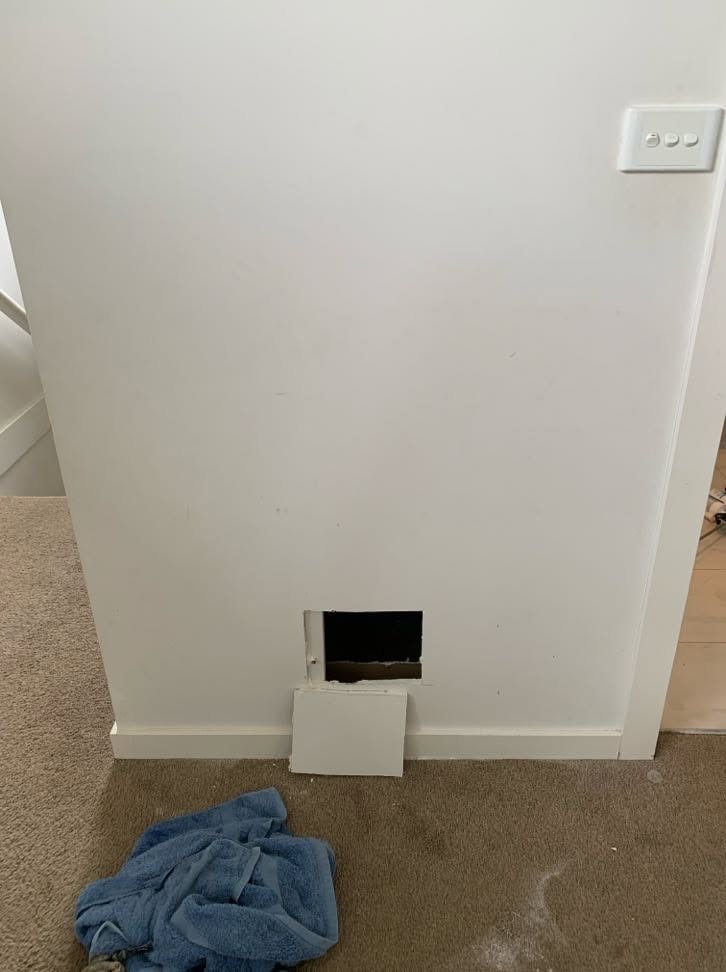
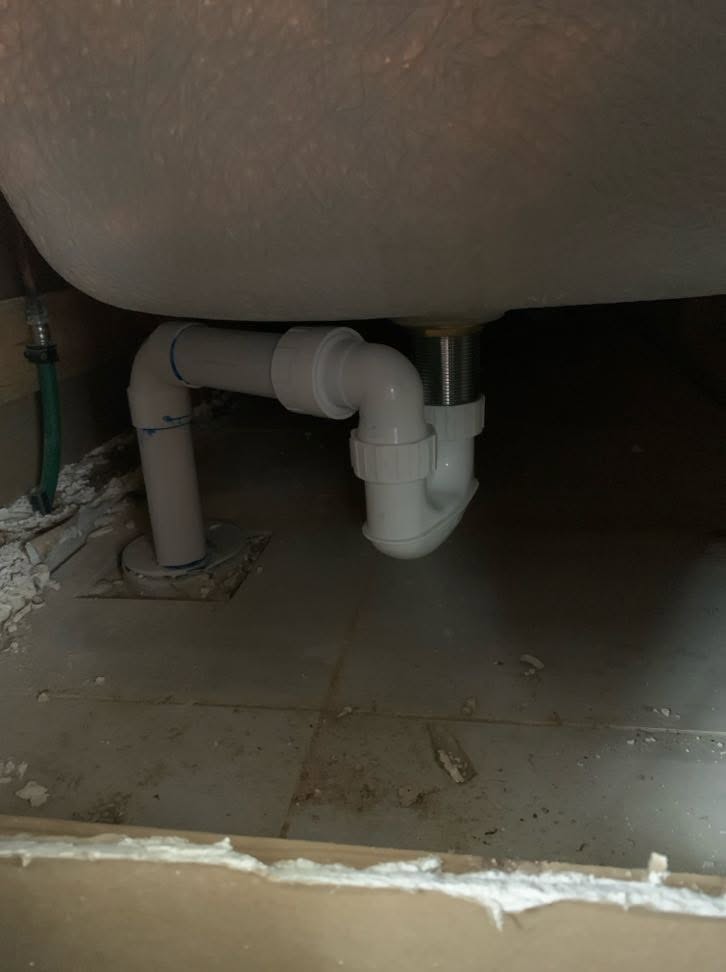
Through the opening, George checked the waste and the drainage connections under the bath.
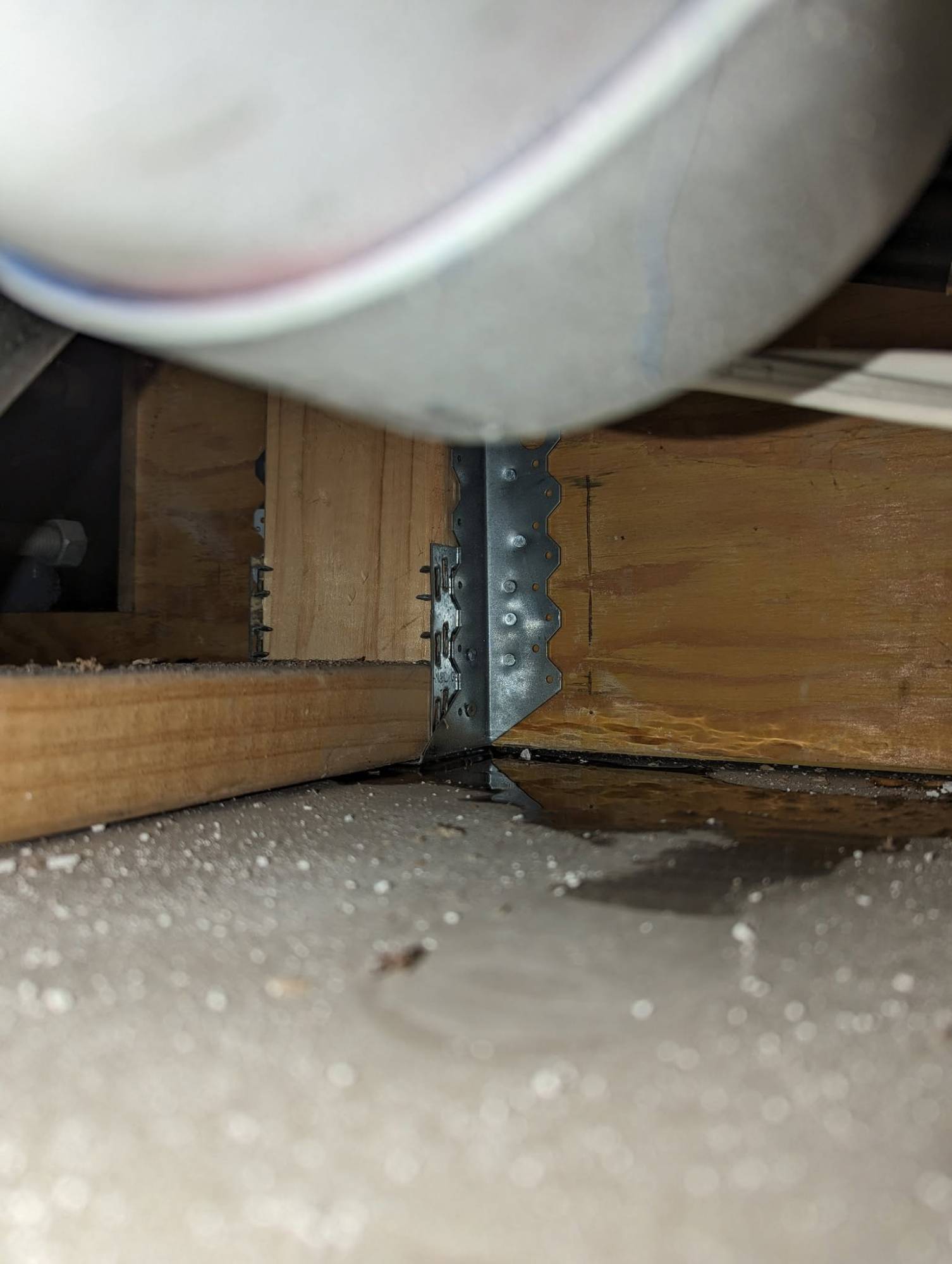
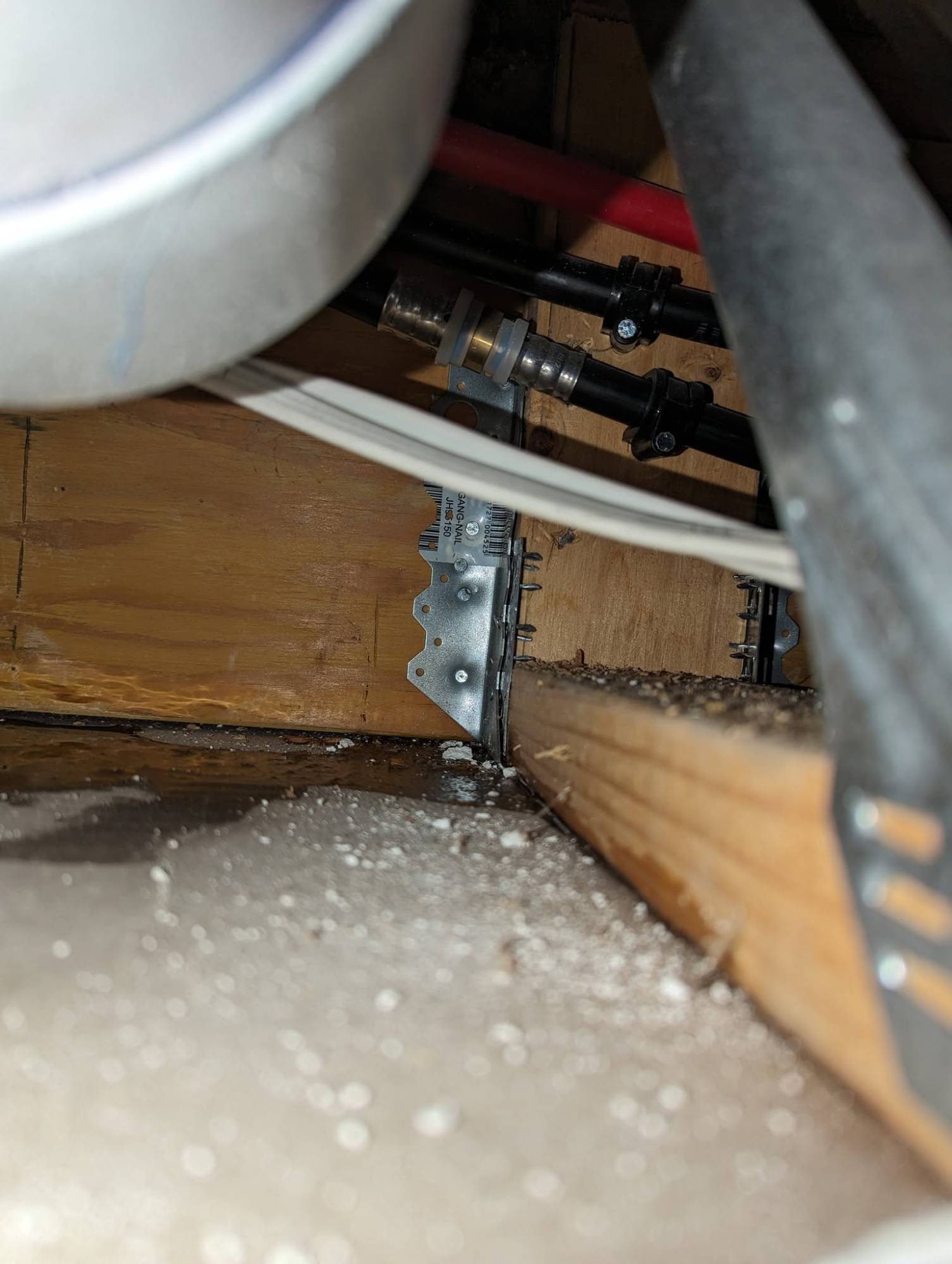
There was water sitting in the floor framing underneath the bath, which showed water had been getting in.
On top, the seal along the bath hob had deteriorated, leaving a gap where the bath meets the tiles.
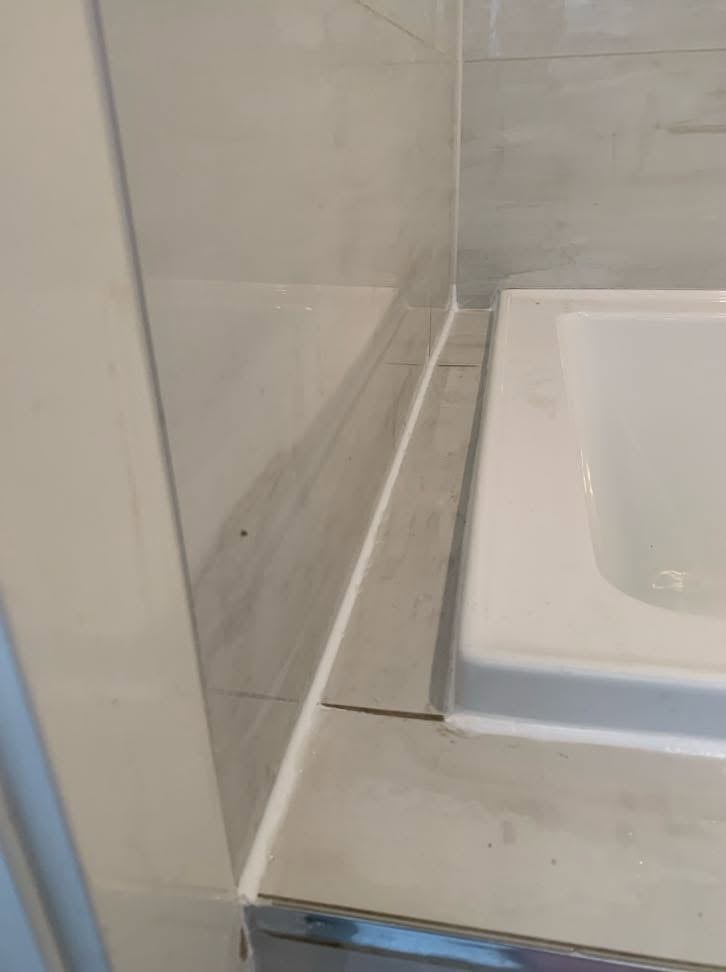
The work George carried out
George repaired the deteriorated seal along the bath hob, closing the gap where the bath meets the tiles.
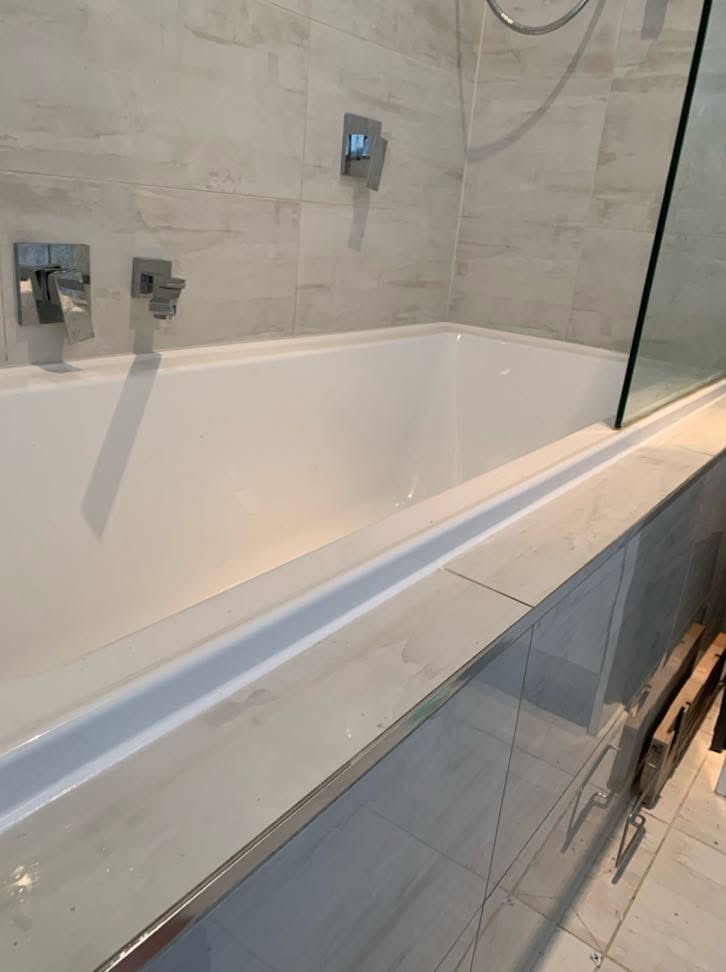
The result
The bath hob is sealed again, so water from the bath and shower stays on top of the hob rather than running underneath.
What to do if you suspect a bath is leaking
Signs of a leaking bath are usually found somewhere other than the bathroom:
- damp or stained carpet in the room next to or below the bathroom
- a stain or bubbling paint on the ceiling below
- a musty smell around the bath
- cracked, discoloured or lifting silicone along the edge of the bath
- loose or drummy tiles on the bath hob
If you notice any of these, it’s worth having it checked early. Water that sits in the framing for a long time can damage timber, plaster and floor coverings well beyond the bathroom.
Related reading: Water leak repair in Burwood · Water leak repair in Camberwell
Frequently asked questions
What is a bath hob?
The hob is the tiled frame or ledge that a built-in bath sits in. The top edge of the bath rests against it, and the join between the two is sealed to keep water out.
How can a bath leak cause damage in another room?
Water that gets past a failed seal runs under the bath and along the floor framing. It can travel some distance before it shows up, often as damp carpet in a neighbouring room or a stain on the ceiling below.
Why does the seal around a bath fail?
The seal is wet every day, flexes as the bath fills and empties, and breaks down with age. Over time it cracks, shrinks or pulls away from the tiles.
How do you check underneath a fixed bath?
Usually by opening up access, either through an existing access panel or by cutting a small opening in an adjoining wall or the bath panel. That lets a plumber see the waste, drainage and water connections and look for signs of water.
Should I wait until I see a stain before calling a plumber?
No. By the time a stain appears, water has usually been getting in for a while. If you notice damp carpet, a musty smell or a broken seal around the bath, it’s worth getting it checked.
Damp carpet near the bathroom, or a stain on the ceiling below?
Doherty Plumbing Solutions can find where the water is coming from and tell you what needs doing.
Call Doherty Plumbing Solutions on (03) 9877 5775 or get in touch online.