What not to put down your drains (and what to do instead)
Most blocked drains we fix in the Eastern Suburbs homes are not caused by old pipes. They are caused by everyday habits. Small items that seem harmless slowly build up inside your plumbing and create a drain blockage over time.
In this blog, our plumbers in Burwood will explain what not to put down your drains, why these items cause problems, and how to clear a blocked drain safely without damaging your pipes.
Knowing these can save you stress, damage, and the cost of an emergency call-out. It also helps you understand when it is safe to act and when you should stop and get expert help.
Having trouble with blocked drains? Call the experts at Doherty Plumbing Solutions on 03 9877 5775 or submit an enquiry to speak with a local blocked drain plumber in Burwood and the entire Eastern Suburbs.
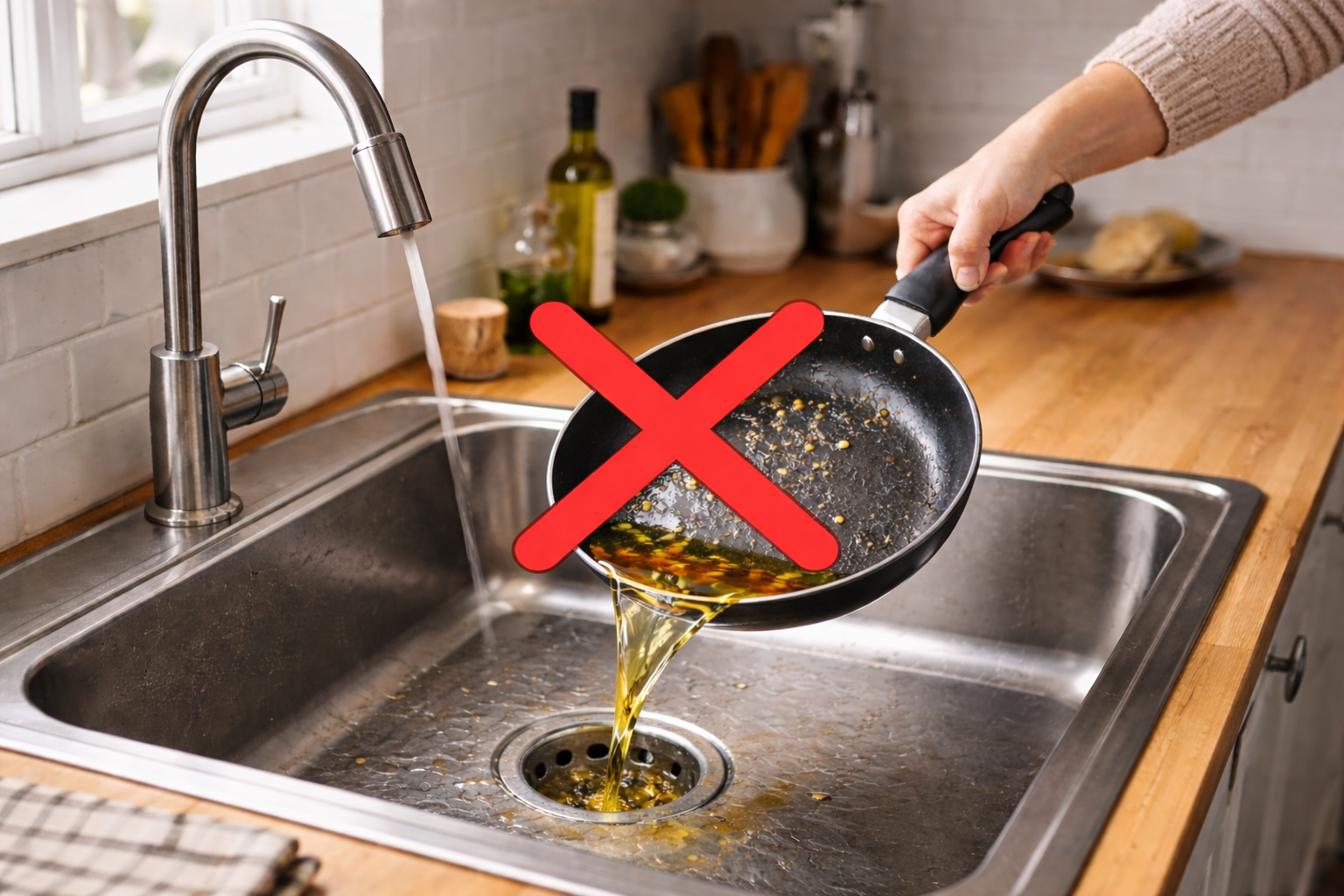
Common things you should never put down your drains
1. Cooking fats, oils, and grease
Pouring oil or fat down your kitchen sink is one of the fastest ways to clog drains. Even hot oil cools quickly once it enters the pipe. It coats the inside of your plumbing and traps other debris.
Over time, this build-up restricts water flow and creates stubborn blockages that hot water alone cannot remove.
What to do instead:
Let the grease cool in a container. Wipe pans with a paper towel and safely dispose of it in the bin.
2. Coffee grounds
Coffee grounds do not dissolve in water. They sink to the bottom of pipes and collect in bends. When mixed with grease, they form a dense sludge that blocks drains.
Despite common myths, coffee grounds do not clean pipes. They are a frequent cause of kitchen sink blockages.
What to do instead:
Place coffee grounds in the compost or rubbish bin. You can also scatter them around any nitrogen loving plants in your garden such as gardenias & hydrangeas. Never rinse them down your sink.
3. Food scraps and starchy foods
Rice, pasta, noodles, flour, and potato peelings absorb water and swell. Flour mixed with water turns into a sticky paste that clings to pipe walls.
These foods are especially problematic in homes with older plumbing or limited pipe fall.
What to do instead:
Scrape plates into the bin. Use a sink strainer to catch food waste before it enters the drain or waste disposal.
4. Produce stickers
Produce stickers are made from plastic and adhesive. They do not break down in water and often stick inside pipes or at pipe joins.
Over time, they catch other debris and contribute to drain blockages.
What to do instead:
Remove stickers before washing fruit and vegetables and place them in the bin.
5. Paper towels, wipes, and hygiene products
A paper towel does not dissolve like toilet paper. Even wipes labelled ‘flushable’ do not break down properly and often clog drains.
These items are a major cause of sewer blockages and wastewater issues.
What to do instead:
Dispose of paper towels, wipes, and hygiene products safely in the bin.
6. Harsh chemical drain cleaners
Many chemical drain cleaner products can damage your pipes. They contain harmful chemicals that can soften PVC pipes, corrode metal plumbing, and damage seals.
They often fail to remove the blockage, making professional drain clearing more difficult and dangerous.
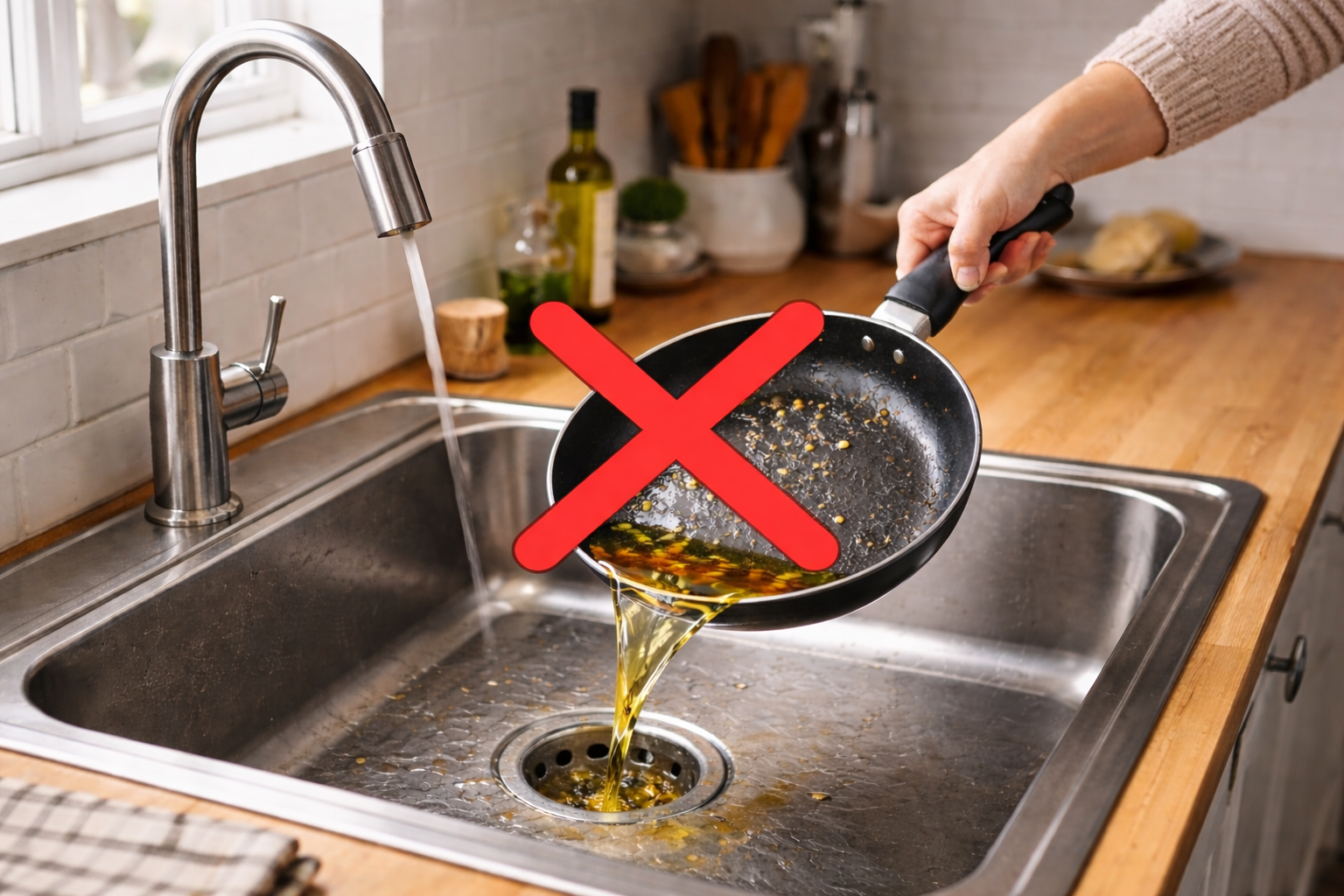
Signs you may have blocked drains
Blocked drains often show warning signs before they stop working completely. Common signs include:
- Slow-draining water in sinks, showers, or floor wastes
- Gurgling noises after taps or appliances are used
- Unpleasant smells coming from drains
- Water is backing up in one area when another is used
- Blockages that keep returning after basic clearing
These issues are commonly caused by grease build-up, food waste, hair, paper towels, wipes, or soap residue. In some homes, other causes may include damaged pipes, poor pipe fall, or tree roots entering older plumbing, which makes it easier for debris to catch and form a blockage.
If you notice these signs, acting early can help prevent pipe damage and more serious drainage problems.
How to clear a blocked drain safely at home
If the drain is slow but still flowing, there are a few safe steps you can try before calling a plumber.
- Pour hot water down the drain to loosen grease
- Add a cup of baking soda, followed by vinegar and baking soda reaction
- Flush again with hot water
- Remove visible debris from the kitchen sink or shower waste
- Use a plastic drain cleaning stick to gently remove hair or debris caught near the drain opening.
Always stop if resistance is strong. Forcing tools can damage pipes or push the blockage deeper.
For a clearer breakdown of safe steps versus risky ones, see our guide on what you can safely try before calling a blocked drain plumber.
What not to do when clearing a drain
Some DIY methods cause more damage than the blockage itself. Here are some common DIY drain fixes that plumbers don’t recommend:
- Do not mix drain cleaner products
- Do not repeatedly pour chemicals down the drain
- Do not force metal tools into older pipes
- Do not ignore repeated blockages
These mistakes are common and often turn a simple issue into a costly repair.
When to call a professional plumber
If water is backing up, multiple fixtures are affected, or smells are strong, the blockage is likely deeper in the system. At this stage, home methods will not clear the problem safely.
A professional plumber can inspect the drain, identify the cause, and clear it properly with a drain machine that cuts away debris without damaging your pipes.
Get expert help before the damage spreads
Blocked drains rarely fix themselves. Acting early protects your plumbing and your home.
If you are dealing with slow drainage, repeat blockages, or are unsure what is safe to try, speak with an experienced local plumber.
Call 03 9877 5775 or submit an enquiry to book a Burwood blocked drain inspection with Doherty Plumbing Solutions.